

Choosing generator power for your project needs is a crucial decision that determines smooth operation. A generator that’s too small will struggle to handle peak loads, while one that’s too large will waste fuel and increase operating costs. Here’s a practical guide to help you make the right choice.
1. Calculate your needs before choosing a generator.
The first step is to identify and add up the power consumption of all the electrical equipment that will be running simultaneously. Power data is usually listed in watts or kW for each piece of equipment. .
Make sure you note:
- Normal power (running load) : electricity consumption when the equipment is operating stably
- Starting load : the power surge when the equipment is first turned on, especially for equipment with electric motors such as air conditioners, water pumps, or compressors, which can reach 2–7 times their normal power.
2. Understand kVA to Watt Conversion
Generator capacity is generally expressed in kVA (kilovolt-amperes), while equipment requirements are measured in watts or kW. These are not equivalent figures. A 1 kVA generator is equivalent to approximately 800 watts, or 0.8 kW, assuming a standard power factor (cos phi) of 0.8.
Basic formula:
Watt = kVA x Power Factor (Cos Phi)
Example: A 20 kVA generator is capable of supplying a real power of approximately 16,000 Watts (20 × 0.8).
3. Add a 20–30% Safety Margin
After calculating the total power and accounting for the starting load, add a safety margin of 20–30% to the total requirement. This is important to prevent the generator from operating at its maximum capacity continuously, which can accelerate engine wear.
For example, if your total power requirement is 10 kW, choose a generator with a capacity of around 12–13 kW or 15–16 kVA.
4. Identify the Type of Load to be Supplied
Not all electrical loads are created equal. Generators need to be familiarized with the nature of the loads they will handle, as each type of load has characteristics that affect its performance.
Resistive loads like incandescent lamps and heaters are relatively simple because their power consumption is constant. Inductive loads like electric motors require high power surges at start-up and large amounts of reactive power (kVAR).
Non-linear loads such as UPSs, VFDs (Variable Frequency Drives), and modern electronic equipment produce harmonics that can disrupt voltage stability and heat up the alternator. If the non-linear load exceeds 15% of the total, a generator with a larger alternator is recommended.
5. Understand the Generator Power Rating
The international standard ISO 8528 divides generator ratings into several categories that influence the selection method :
| Rating | Use | Beban | Overload |
|---|---|---|---|
| Standby/Emergency | Emergency, < 200 hours/year | Variabel, maks 70% | Tidak ada |
| Prime Power | State-Owned Utilitiy replacement, unlimited hours | Variabel, maks 70% | 10% (1 hour/12 hours) |
| Continuous Power | Constant load, unlimited hours | 100% | No |
For construction projects or daily operations, the
Prime Power rating is the most appropriate choice because it provides variable load flexibility with overload reserve.
6. Pay attention to the order in which you turn on the load
Equipment starting strategies can help reduce the generator’s peak power requirements. :
- Start the largest motor first before starting the smaller motors.
- Avoid turning on all loads at once — use a step loading system with gradual transfer switches.
- For UPS and sensitive equipment, turn it on after the generator is stable and other loads are running.
7. The Right Solution When Choosing Generator Power: Don’t Choose Too Big or Too Small
An oversized generator is just as problematic as one that’s too small. Operating a diesel generator at low loads (<30% of its rated capacity) can lead to incomplete combustion , carbon buildup, and clogged injectors, resulting in poor performance when needed.
Choose a generator that’s “just enough”—with a 20–30% safety margin, but not excessive. For large-scale projects, consider modular (parallel) generators for flexibility in adjusting to load requirements.
8. Consider Environmental and Location Factors
The condition of the installation location also affects the performance of the generator:
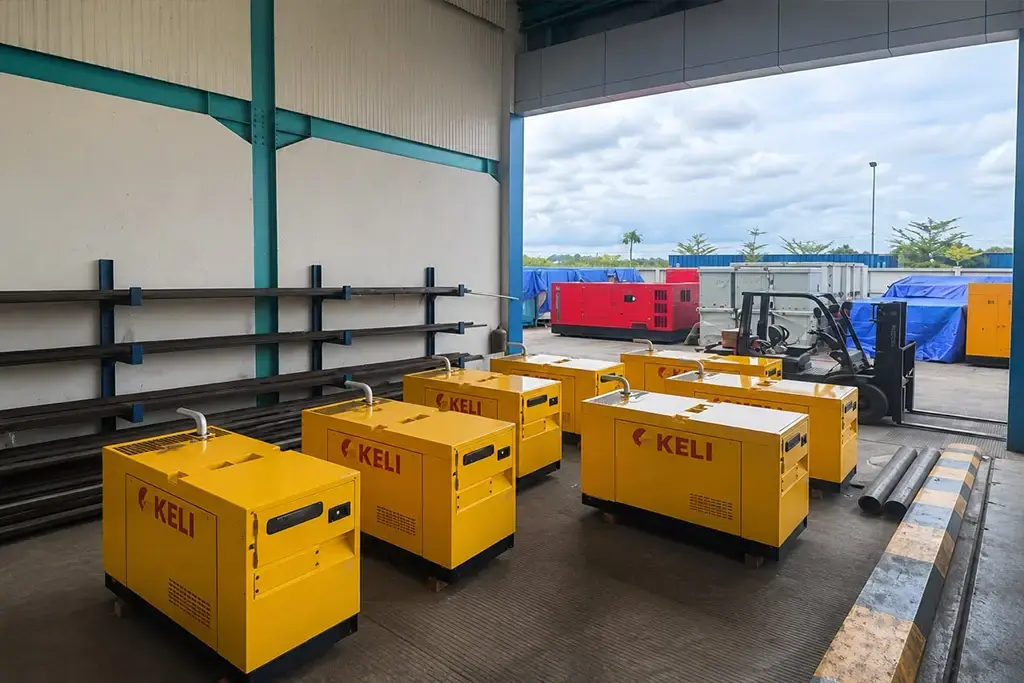
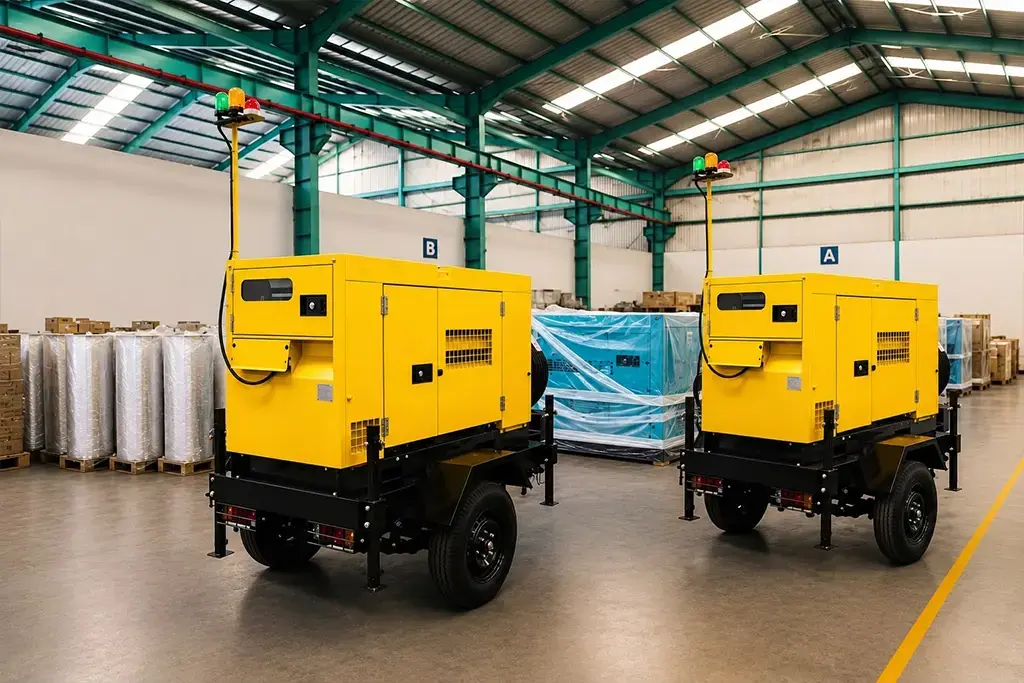
- Noise level : Silent generators (low noise) are suitable for densely populated areas, hospitals or offices, while open types are more economical for open areas.
- Fuel type : Diesel generators are more responsive to load changes than natural gas.
- Altitude and ambient temperature : Engine performance decreases at high altitudes or extreme temperatures—be sure to consult your supplier.
Closing
Selecting a generator is a long-term investment. Perform careful load calculations, add a safety margin, understand the appropriate ratings, and consult with a professional generator supplier. With the right choice, your project will run smoothly, efficiently, and without power outages.
Reference:
- Electricity-Saving Residential Generator Sizes – HARGEN Genset
- Easy Steps to Calculate Generator Power – HARGEN Genset
- How Many Watts is a 20 kVA Generator? Here’s How to Calculate and Tips for Choosing One – HARGEN Genset
- Tips for Choosing a Generator According to Your Electricity Needs – Honda Power Products Indonesia
- 7 Tips for Choosing the Right Generator for Your Needs – Hartech
- Generator Set Load Considerations & Recommended Installation – Sean Manz of Cummins Western Canada
- Critical data for sizing gen-sets – EC&M
- How not to select the wrong generator set (genset) for your application | EEP
- Important generator set (genset) rating considerations | EEP
Need further consultation regarding your project’s generator needs?
The Garuda Greta Nusantara team is ready to help provide reliable and tailored electrical solutions.